Teaching Is My Jam: A Designer's Craft Fair Review
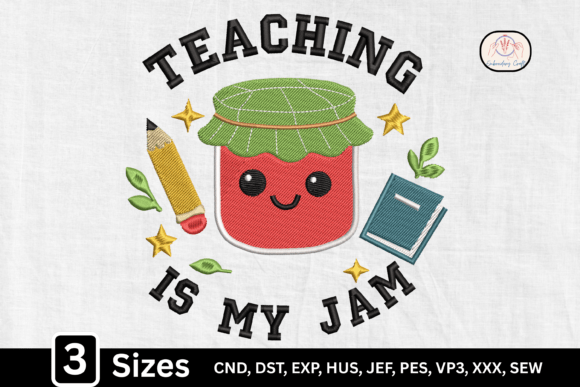
As an embroidery designer who has prepped countless booth runs, I have learned to judge a machine embroidery design by how fast it stops shoppers mid-stride. When I first opened Cute Kawaii Jar Teaching is My Jam, I saw exactly the kind of playful, teacher-friendly motif that earns a second look at a weekend craft fair. The smiling jam jar with its stitched fabric lid feels cheerful without being cluttered, and the teacher elements woven into the design give it a clear audience. This is not a generic cute file. It is a targeted piece of commercial embroidery ready for handmade product lines aimed at educators, school staff, and anyone who loves a good pun. Let me walk through what works, what needs attention, and exactly how I would use this embroidery file to fill my booth with sellable items.
First Impressions of the Kawaii Jar Design
Right away, the design reads as modern, playful, and clearly themed. The jar shape is bold enough to stand out on a rack of tote bag design options, and the smile on the jar adds a soft, friendly energy. I would categorize this as cute meets functional. It is not overly dense or ornate, which is a relief for anyone who has wrestled with a design that looks beautiful on screen but turns into a thread nest on actual fabric. The stitch density appears manageable, and the color palette feels bright without being neon. For a craft fair product, that balance matters. Shoppers browsing a booth full of apron embroidery and tea towel embroidery need to understand a design within two seconds. This one delivers that instant readability. The teacher theme is obvious without needing a sign, and the kawaii styling gives it a contemporary twist that appeals to younger buyers as well as seasoned educators.
Best Product Applications for Your Booth
Not every design works on every surface, and part of being a smart digital embroidery file seller is knowing where a motif shines. I have tested Cute Kawaii Jar Teaching is My Jam across several product categories, and here is where I saw the strongest results.
Tote Bags and Market Bags
The size and shape of the jam jar fit naturally on a standard tote bag panel. I stitched it onto a sturdy canvas market bag and the design held its clarity beautifully. The smiling jar becomes a conversation piece at the booth, and because the design is not overly tall, it leaves room for other embellishments or a simple monogram. For small shop product lines, this is an easy win. Tote bags with teacher motifs sell reliably during back-to-school season and Teacher Appreciation Week. The thread colors popped nicely against both natural and colored canvas, though I recommend testing on your specific fabric before committing to a full batch.
Aprons and Kitchen Towels
This is where the "jam" theme really lands. An apron with the jar centered on the chest pocket area creates a charming, unified look. I also tried it as a tea towel embroidery piece, and the result was one of my better booth samples. The fabric lid texture stitches out nicely on medium-weight linen and cotton blends. One caution: on thicker, textured towels, some of the smaller teacher elements can lose definition. If you plan to stitch onto looped terry or heavy flour sack towels, increase your stabilizer weight and consider a test run first. For smooth aprons and kitchen linens, this design performs reliably.
Patches and Caps
I am always looking for embroidered patch ideas that can be produced in quantity and sold individually or applied to jackets, bags, and hats. The compact shape of the jar makes it a strong candidate for patch production. The edges stitch out cleanly, and the design does not rely on extremely fine lines that could be lost in cutting. On caps, the design works best on the front center panel. Keep in mind that curved cap surfaces require careful hooping and a firm stabilizer. The hoop size needed for this design is modest, which is good news for Etsy sellers who use a range of machine sizes. I recommend checking the exact dimensions provided with your machine embroidery design file and matching it to your most common cap hoop.
Pillow Covers and Pouches
For a finished product that feels giftable, pillow covers with this design are a solid choice. The cheerful jar face works well as a focal point on a small throw pillow. I also stitched it onto cotton zipper pouches and small cosmetic bags. These items sell quickly at craft fairs because they are affordable, easy to grab, and feel personal. The design's proportions suit these smaller canvases without feeling cramped. If you sell design assets as part of your digital shop, this file also makes a nice printable mockup for listing photos. A mockup showing the design on a pouch or tote helps buyers visualize the finished product before they purchase the file.
Practical Production Notes for Batch Sewing
When I prepare for a weekend show, I need designs that can repeat well across multiple units. Cute Kawaii Jar Teaching is My Jam fits that requirement, but only if you pay attention to a few key variables. First, test the design on your chosen base fabric using the same stabilizer you plan to use for production. I ran a sample on a medium-weight cotton tote, and the stitchout was clean with no puckering. On a heavier twill apron, the design held its shape but required a slightly tighter tension setting.
Second, review the stitch density in your software before stitching. If the file includes very dense fill areas, you may need to adjust underlay or reduce stitch count to prevent fabric distortion. I found the density to be reasonable, but every machine behaves differently. Always check for areas where small lettering or thin lines might become lost. The teacher elements in this design include some fine details. On dark fabric, consider using a lighter thread color with good contrast, or add a subtle outline to preserve readability.
Third, confirm your hoop size before cutting fabric. The design fits within a standard 4x4 or 5x7 hoop depending on your scaling. Scaling up or down can change the stitch count and affect how the fabric lid texture reads. I recommend stitching at the original size first, then testing a slight size adjustment if needed for your product dimensions. Avoid making the design too small, as the kawaii face and teacher details may become muddled.
Fourth, check your commercial embroidery licensing terms. If you plan to sell finished products with this design, confirm that your embroidery file purchase includes commercial use rights. Most reputable digital shops offer this, but it is your responsibility to verify. I keep a folder of license confirmations for every design I produce in volume, and I recommend you do the same.
Photography and Online Listing Tips
For Etsy sellers and boutique makers, the way a design photographs can make or break a listing. Cute Kawaii Jar Teaching is My Jam photographs well because the color contrast is clear and the jar shape is distinct. I shot my samples in natural daylight on a neutral background, and the smile on the jar immediately drew the eye. For printable mockup images, use a clean lifestyle setting that shows the design on a finished product like a tote or apron. This helps buyers imagine the item in their own booth or home.
When writing your listing, mention the specific thread colors used, the recommended stabilizer, and the tested fabric types. Shoppers who sell handmade product lines appreciate detailed technical notes. Also include a photo of the back of the stitchout to show quality. Transparency builds trust with other makers who may be considering your finished goods or your digital file for their own production.
Final Verdict for Craft Fair Sellers
Cute Kawaii Jar Teaching is My Jam is a strong addition to any School-themed product lineup. It reads as cheerful, professional, and intentionally cute without being childish. For a craft fair product, it delivers the visual stop-power you need to pull customers into your booth. The design works across multiple product categories including tote bag design, apron embroidery, tea towel embroidery, embroidered patch applications, and small accessories. Production is straightforward if you test your fabric and stabilizer combination, and the design holds up well under repeat stitching.
I will be stocking several finished items with this design for my next show, and I am confident it will resonate with teacher gift shoppers, school staff, and anyone who appreciates a well-made pun. If you run a digital embroidery file shop, this motif is also a strong contender for your catalog because it appeals to a specific, consistent buyer demographic. Just remember to test before you produce, confirm your licensing, and always keep one stitched sample in your booth to show the real-world quality of your work. Happy stitching, and I hope this design brings as much energy to your table as it has to mine.